
Could Samsung’s Galaxy Fold 8 Revive Apple’s Patent Rivalry?
How Samsung’s manufacturing might be outpacing Apple’s foldable ambitions and whether history could repeat itself.
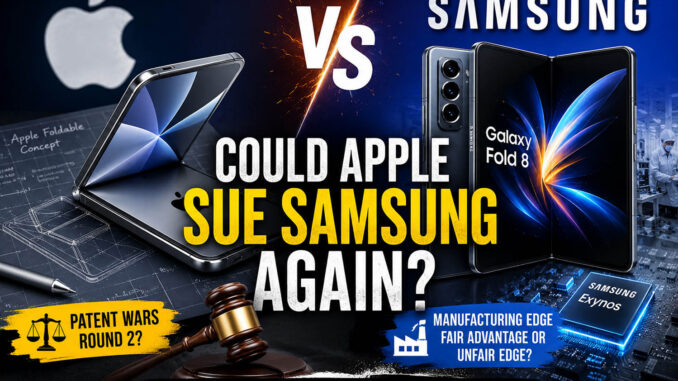
When Samsung unveiled the Galaxy Fold 8, it immediately reignited a familiar debate in the technology world. While there is no indication that Apple is suing Samsung, some industry observers and enthusiasts have begun asking whether the similarities between Samsung’s latest foldable and the widely rumored Apple foldable iPhone could eventually lead to another legal battle.
It’s an intriguing question, not because a lawsuit appears imminent, but because Apple and Samsung have already fought one of the biggest patent wars in technology history.
A Rivalry That Once Defined the Smartphone Industry
The Apple–Samsung legal battle that began in 2011 reshaped how smartphone companies viewed patents and industrial design. Apple accused Samsung of copying key elements of the original iPhone’s design and user interface, while Samsung responded with its own patent claims. After years of litigation across multiple countries, both companies settled most of their disputes.
Since then, the smartphone industry has evolved dramatically, but the competitive relationship between the two companies remains stronger than ever.
Why the Galaxy Fold 8 Is Generating Discussion
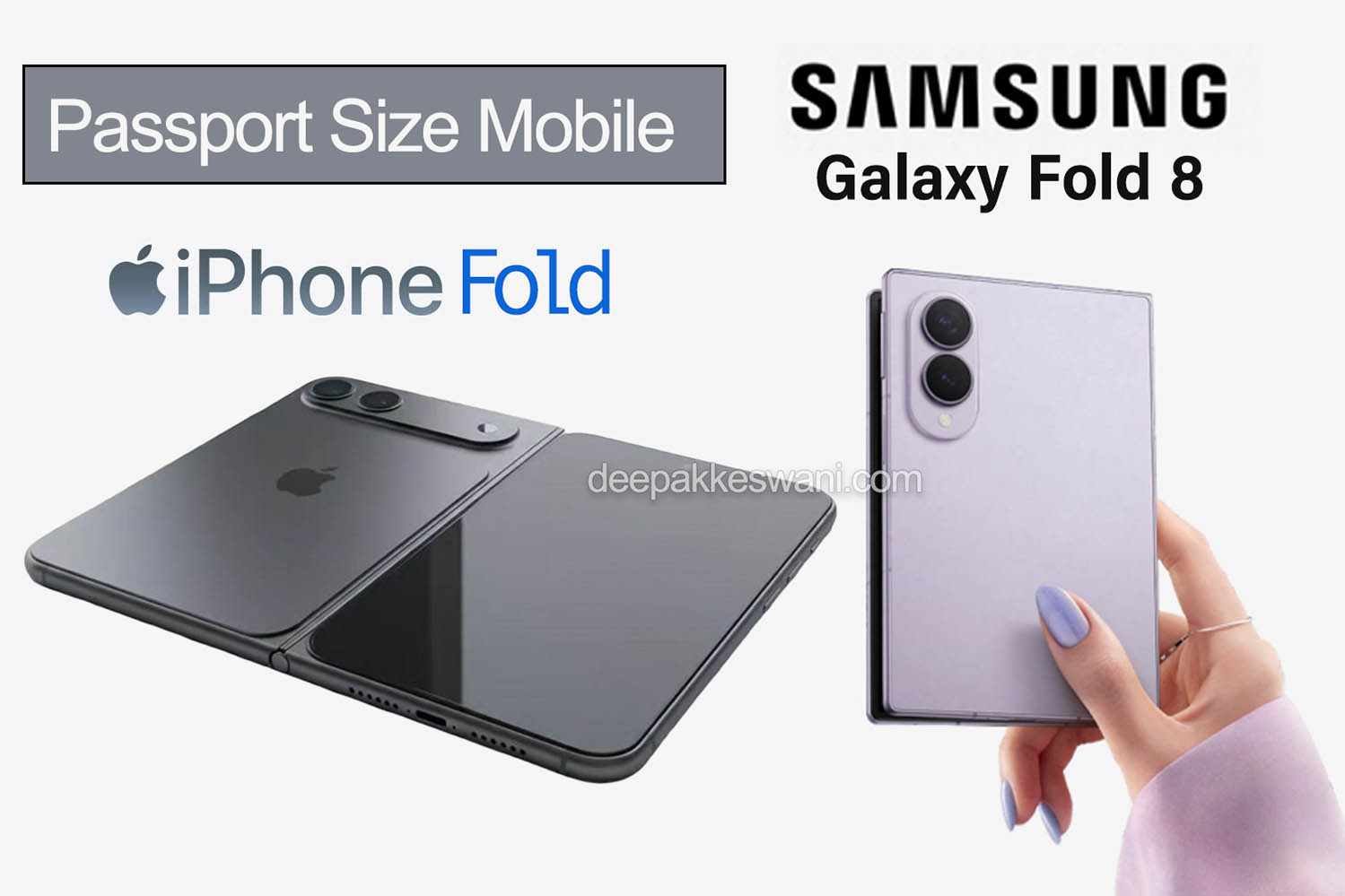
Although Apple has not officially announced or unveiled a foldable iPhone, numerous analyst reports, supply-chain leaks, and patent filings over the past several years have painted a fairly consistent picture of what Apple’s first foldable device might look like.
The Galaxy Fold 8’s proportions, slimmer profile, refined hinge, and overall industrial design have prompted some enthusiasts to compare it with these rumored Apple concepts.
It is important to note that these comparisons are based on leaks and industry expectations not on an actual Apple product. Until Apple officially reveals its foldable device, no direct design comparison can be confirmed.
Similar Doesn’t Always Mean Infringement
One of the biggest misconceptions in technology is that two products looking alike automatically leads to a patent lawsuit.
In reality, patent law is far more complex.
For Apple to pursue legal action successfully, it would generally need to demonstrate infringement of specific intellectual property, such as:
- Utility patents covering technical innovations
- Design patents protecting ornamental features
- Trade dress, if consumers are likely to confuse one product for another
- Patented software or user interface elements
Modern foldable smartphones are also constrained by engineering realities. Thin displays, durable hinges, minimal bezels, and pocket-friendly dimensions naturally lead manufacturers toward similar solutions. As a result, resemblance alone is unlikely to be sufficient grounds for legal action.
Samsung’s Greatest Advantage: Manufacturing at Scale
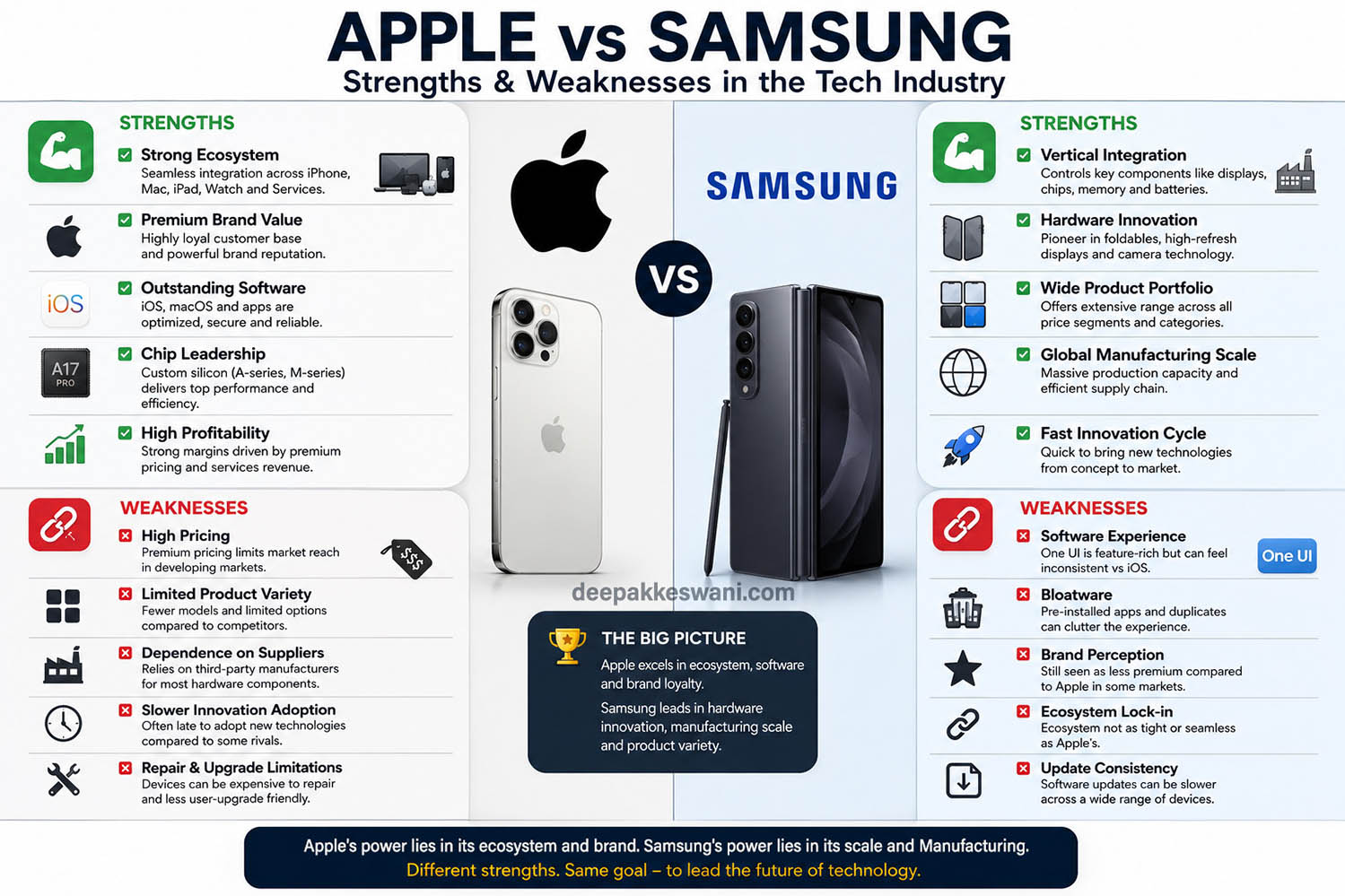
One of Samsung’s most significant strengths lies not just in smartphone design but in its manufacturing ecosystem.
Samsung manufactures many of the technologies that power modern smartphones, including:
- OLED displays
- Memory chips
- Storage solutions
- Semiconductor fabrication
- Camera components
- Display technologies
- Advanced manufacturing equipment through various group companies
This level of vertical integration allows Samsung to move rapidly from prototype to commercial product. The company can iterate hardware quickly, refine designs in-house, and manufacture at enormous scale.
Few technology companies possess this level of manufacturing capability.
Apple’s Different Formula
Apple has chosen a very different approach.
Instead of owning extensive manufacturing operations, Apple focuses on:
- Product vision
- Industrial design
- Silicon engineering
- Software optimization
- User experience
- Ecosystem integration
Production is handled through a global network of suppliers and manufacturing partners spread across China, India, Vietnam, Taiwan, South Korea, and other countries.
This model often results in longer development cycles, but it also allows Apple to combine best-in-class expertise from specialized manufacturing partners while concentrating on product integration and software excellence.
Historically, Apple has often entered new product categories later than competitors, preferring to refine technology before bringing it to market.
Does Samsung Have a Structural Competitive Advantage?
This raises an interesting strategic question.
Because Samsung controls much of its hardware supply chain, it can often commercialize new technologies faster than competitors that rely on external manufacturers.
That does not necessarily constitute an unfair advantage. Rather, it is a structural competitive advantage built over decades of investment in semiconductor fabrication, display manufacturing, and component engineering.
Apple, on the other hand, benefits from different competitive strengths:
- Industry-leading custom silicon
- A tightly integrated hardware and software ecosystem
- Strong brand loyalty
- High-margin premium products
- A thriving services business
Each company competes using a fundamentally different strategy.
Could Apple Go to Court Again?
If Apple believes that any future Samsung product infringes valid patents, it has every legal right to defend its intellectual property, just as Samsung does.
Possible legal remedies could include:
- Patent infringement lawsuits
- Financial damages
- Licensing negotiations
- Import restrictions in certain jurisdictions
- Injunctions where courts determine infringement has occurred
However, there is currently no public evidence that Apple intends to sue Samsung over the Galaxy Fold 8, nor has Apple made any public allegation that Samsung copied its unreleased foldable device.
At present, any prediction of litigation remains speculative.
The Bigger Picture
Interestingly, Apple and Samsung are not just rivals, they are also long-standing business partners.
Samsung supplies Apple with billions of dollars’ worth of critical components, including OLED displays and memory, even as the two companies compete fiercely in the premium smartphone market. This unique relationship makes their rivalry more nuanced than a simple head-to-head battle.
As foldable technology matures, manufacturers are also likely to converge on similar engineering solutions. Thin devices, stronger hinges, reduced display creases, and larger cover screens are becoming industry-wide goals rather than unique design signatures.
Final Thoughts
The Galaxy Fold 8 demonstrates Samsung’s remarkable ability to transform emerging technologies into commercial products quickly, supported by one of the world’s most advanced manufacturing ecosystems. Apple, meanwhile, continues to emphasize refinement, ecosystem integration, and long-term product maturity over being first to market.
Whether Samsung’s latest foldable bears resemblance to Apple’s rumored future foldable is an interesting topic for discussion, but until Apple officially unveils its own device or identifies specific intellectual property concerns any suggestion of renewed litigation remains hypothetical.
For now, the story is less about another courtroom battle and more about two technology giants pursuing different paths toward the future of foldable smartphones. Samsung appears to have an edge in manufacturing speed and hardware execution, while Apple may ultimately compete through software integration, ecosystem strength, and user experience.
The next chapter in the Apple–Samsung rivalry is likely to be written first in the marketplace and only later, if necessary, in the courtroom.

Leave a Reply